


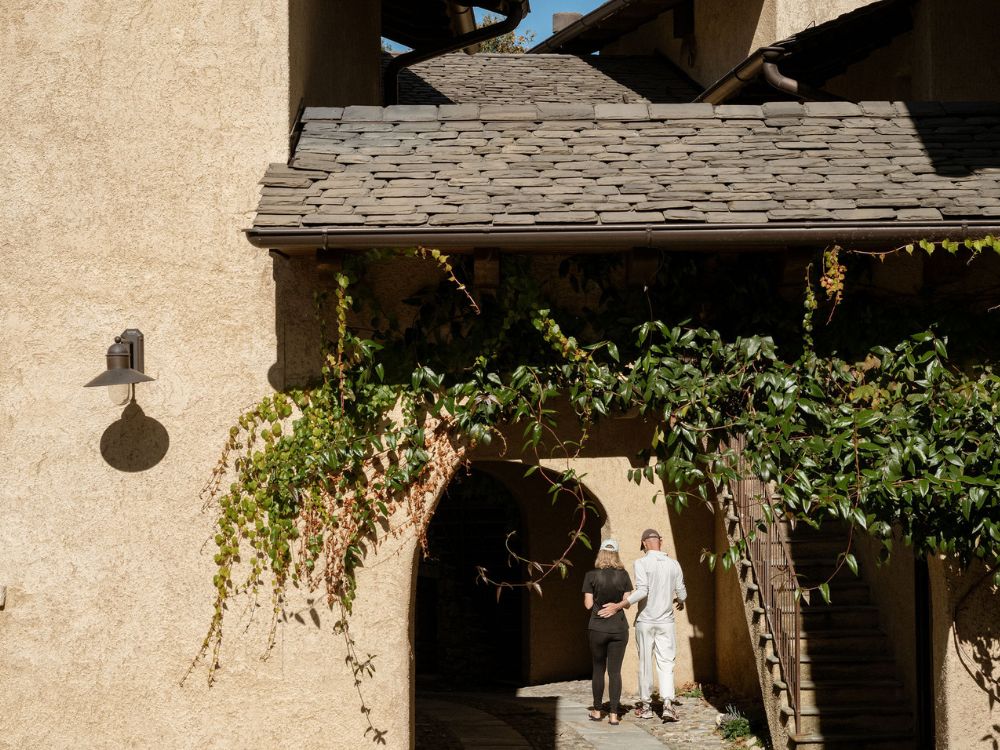
This retreat grew out of Talib and Shubaa’s shared work with couples, and their own lived experience of partnership and parenthood. Over many years, they noticed how intimacy often becomes strained not through lack of love, but through the pressures of commitment, family life, and unspoken emotional layers. This retreat brings their understanding into a practical, embodied space where couples can slow down, reconnect, and tend to the relationship they are living together.
1. What is the original intention at the heart of this couples retreat?
We have been working with couples for over 20 years. After having a child together nine years ago, we began to deeply understand the core challenges couples face in their intimacy, especially after having children, but also when couples make a full commitment to sharing life together.
We saw how themes such as losing freedom, fear of abandonment, and not feeling seen or understood slowly enter the relationship. Intimacy often fades over time, not because love disappears, but because couples lack the tools and resources to stay connected while navigating the demands of parenting, work, and life.
What became clear to us was that many separations trace back to the period around the birth of the first child. Couples often carry unspoken emotional layers; grief, loneliness, rejection, and hurt, but are afraid to acknowledge them. There is a fear that naming these feelings means not appreciating or loving their children. So love gets focused entirely on the children, while the deeper emotional pain between partners remains unexpressed.
Over time, this unspoken pain builds in the relational space, reducing emotional closeness and sexual desire.
Our own personal experience as a couple opened our eyes to these root causes, and from that understanding this work was born. To support couples in restoring connection, meaning, and intimacy, and in rediscovering why they chose to walk life together in the first place.
2. What needs in relationships today do you feel this retreat is uniquely suited to address?
The need to feel connected. Connection is the foundation of safety, trust and intimacy.
True connection requires the freedom to express what we genuinely feel and experience inside ourselves. It also requires safety, the safety to open deeply and trust that the other will meet us there.
At the same time, intimacy needs freedom to survive over time: freedom to be ourselves, to have our own space, friendships, interests, money, desires, and even attractions. Both safety and freedom are essential.
Many couples stop speaking about these two needs once they enter long-term commitment. This creates the first separation, an internal one.
Over time, that inner split festers and shows up in the intimacy space with serious consequences.
This retreat creates a space where couples can reconnect to both needs and learn how to honor them together.
3. Can you walk us through a day in the retreat?
We begin the day by waking up the body through an active meditation. Our work is rooted in the body, because this is where we truly connect with ourselves and with each other. Through this active meditation we slowly start to learn how to regulate our own central nervous system through the physical body. Mental connection is important, but the body is what brings people close on a deeper level, through vitality, sensitivity, and presence.
After this, there is a generous breakfast break of about 90 minutes for nourishment, rest & enjoyment.
The morning session begins at 10:00 and runs until lunch around 13:00. With couples, we intentionally create long lunch breaks, sometimes with guided exploration, learning the language of silence together and sometimes simply to allow quality time together.
The afternoon session runs from 15:00 to 17:30 and includes a softer, active meditation to help integrate the day and slow the nervous system.
Dinner is a time for rest, enjoyment, and connection. Most evenings include an integrative session before closing the day around 21:30.
4. For someone unfamiliar with couple work, what might be surprising or unexpected about participating in this retreat together?
For many couples, this is the first time they have done something like this together. Some may have attended therapy, courses, or retreats individually, but coming as a couple activates dynamics that cannot be accessed alone.
Being together in this way can bring great aliveness, truth, fun & intimacy that really surprises people. It is deeply special to explore as a couple.
Also, to hear other couples talk about their own explorations as well their lives into a very safe and confidential group setting is very special. Because normally people don’t open up about their lives as a couple, and have a tendency to think that they are the only ones to face those struggles and obstacles. And that is a magic that happens over and over again, that when one couple is doing their work, it talks to and touches all the other couples.
Men can identify with other men, and the women can definitely see themselves in other women as well. Once one couple receives a healing, all the other couples that are holding their simple attention receives it too.
This experience of meeting other couples makes one realize that you are not alone. There is often great relief in seeing that your story is their story too, that nothing is “wrong” with you as a couple.
5. What is one misconception people have about doing deep relational work together and how does this retreat shift that narrative?
A common belief is that the deepest work must be done alone.
Of course any emotional intelligence work is absolutely individual, that is true, but some of the most profound transformation happens in a relationship. We can see ourselves the most clear and transparent way when we are relating with one another. Relationships show us where we are placing ourselves in our immature, and mature state of consciousness.
When couples come together, supported by other couples and experienced mentors, the truth can emerge in a contained, resourced, and regulated environment. At home, or by themselves, couples often don’t have the support or clarity to navigate.
We need each other to transform. Being witnessed, supported, and inspired by other couples creates a powerful field for healing and growth.
6. After the retreat ends, what support or guidance do couples have to integrate their insights back into daily life?
We offer ongoing Couples Labs, which take place monthly. These labs provide continued support, connection, and practical resources for couples who are walking this path with us.
We encourage couples to relate to their relationship the way they would to physical health, like going for a long walk or to the gym, but for emotional and relational regulation. Intimacy needs training, care, and consistency.
Therefore no one needs to have a problem or have a crisis in their relationship in order to attend this course.
We see this as an amazing investment towards your own intimate relationship.
7. For people who are nervous about “opening up” in a retreat setting, what would you say to them to ease that concern?
Of course we understand. Especially if it’s the first time. Opening up is delicate, especially when past experiences have not felt safe.
We work with deep respect for each person’s and each couple’s timing. There is no agenda for anyone to be a certain way, or any needs or expectations to share, talk or say anything openly. Because, at any time, you can also keep the explorations just between the couple.
Having said that, there is no right or wrong way to attend this retreat, which creates a relaxed, safe and respectful space.
Then, something beautiful happens: when people begin to feel safe, relaxed, and at home, almost like among friends, the work opens by itself. It’s incredible to witness how human beings shift when safety is present, both within themselves and with their partners.
8. What’s one question you might ask a couple to help them decide if this retreat is the right next step for them?
What do you admire about your partner?
What quality did you first notice and fall in love with?
How often do you focus on that quality today?
Do you miss it?